The breakfast nook is usually the least-styled seat in the house. It gets used more than the sofa, sits in the best light, and almost always ends up with whatever cushions were left over from somewhere else.
Kitchen seating is genuinely different from living-room seating, and the differences are worth knowing before you buy anything for it.
Four ways a kitchen bench is not a sofa
- The backdrop is hard, not soft. A sofa cushion sits against upholstery. A banquette cushion sits against paint, tile, wood or a window. There is no fabric already in play, so the cover is carrying the entire textile job on its own.
- The light is better and less forgiving. Kitchen seating tends to sit near the brightest window in the house. Colors that read as rich in a living room can read as washed out here, which is an argument for saturation rather than subtlety.
- The scale is smaller. Bench backs are lower than sofa backs. An oversized cover that anchors a sofa will swallow a nook.
- Things get spilled on it. This is the one that actually matters, and it is the reason a cover rather than a whole pillow makes more sense here than anywhere else in the house: the cover comes off.
Food motifs: charming, until they are a grocery aisle
Fruit and vegetable motifs belong in a kitchen in a way they belong nowhere else in the house. They are also the easiest thing in decorating to overdo, and the failure mode is specific: more than one food subject in the same eyeline stops reading as a design choice and starts reading as inventory.
The rule that keeps it charming is simple. Pick one edible subject. Repeat it, or support it with a stripe or a check — but do not introduce a second one. Lemons and strawberries and tomatoes together is a farm shop. Lemons, a stripe and a plain is a room.
Route one — lemons, the safest place to start
Lemon is the most forgiving kitchen motif because yellow and green already appear in most kitchens through food, plants and daylight. It reads Mediterranean without needing anything else in the room to agree.
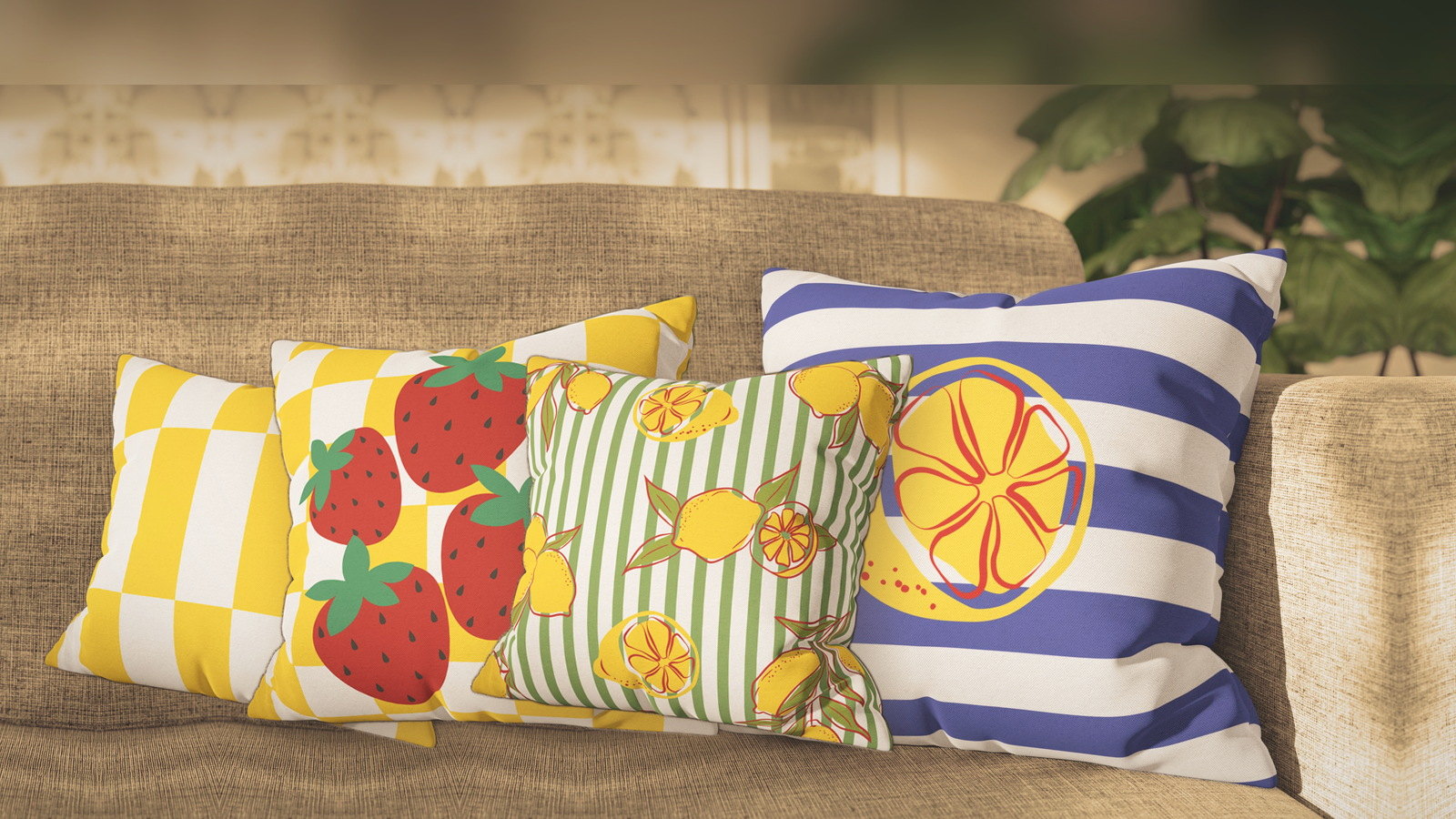
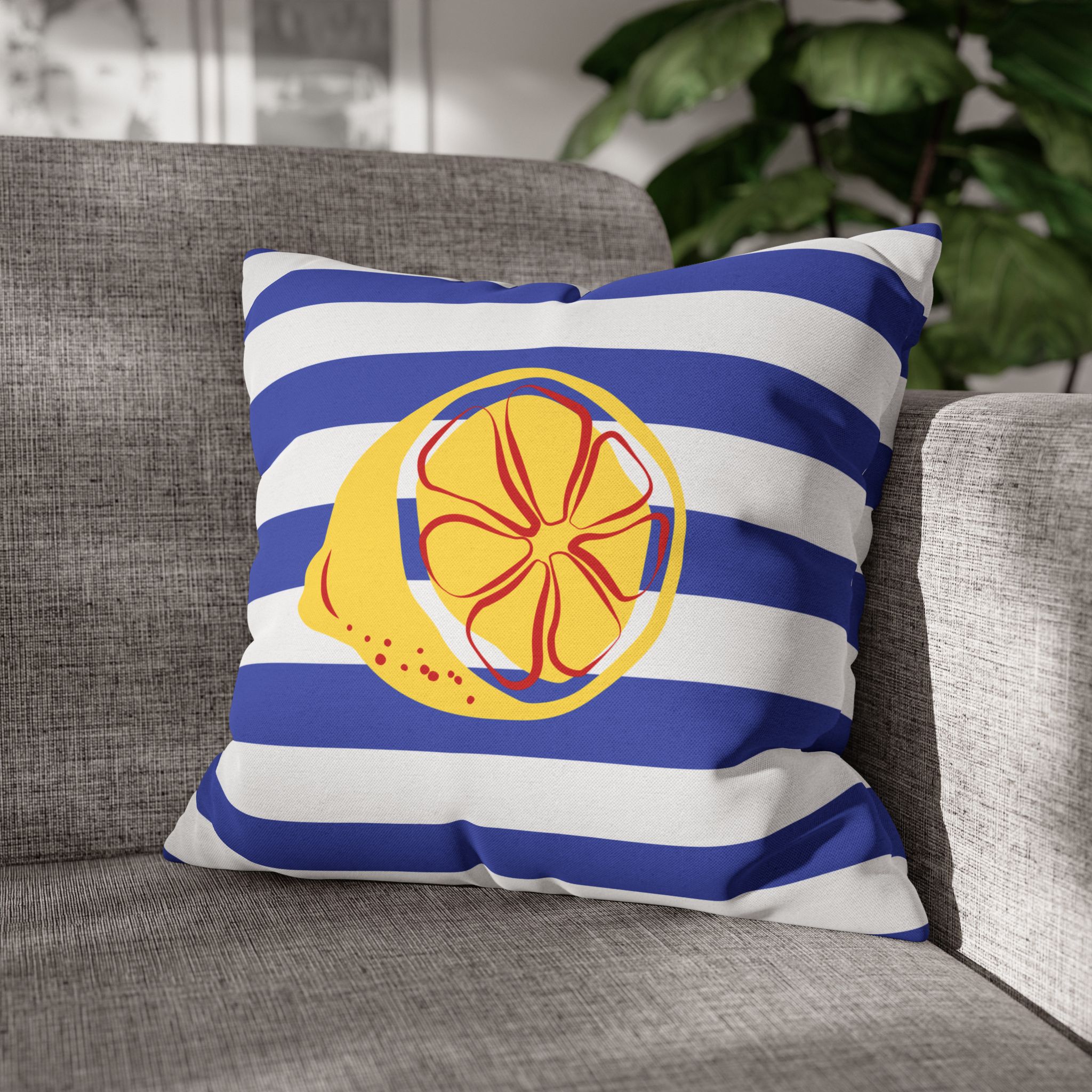
- Lemon — Blue Stripe is the classic pairing: the blue stops the yellow becoming sugary.
- Lemon Grove — Green Stripe keeps everything in the same family, which suits a kitchen that already has a lot going on.
- Lemon Stripe — Soft Pink is the unexpected one, and the one that stops the scheme looking like a tea towel.
Route two — checks, with one piece of fruit
Check is the native pattern of kitchens, and it does something useful: it reads as texture from a distance and as pattern up close. That makes it the ideal support act for a single strong motif.
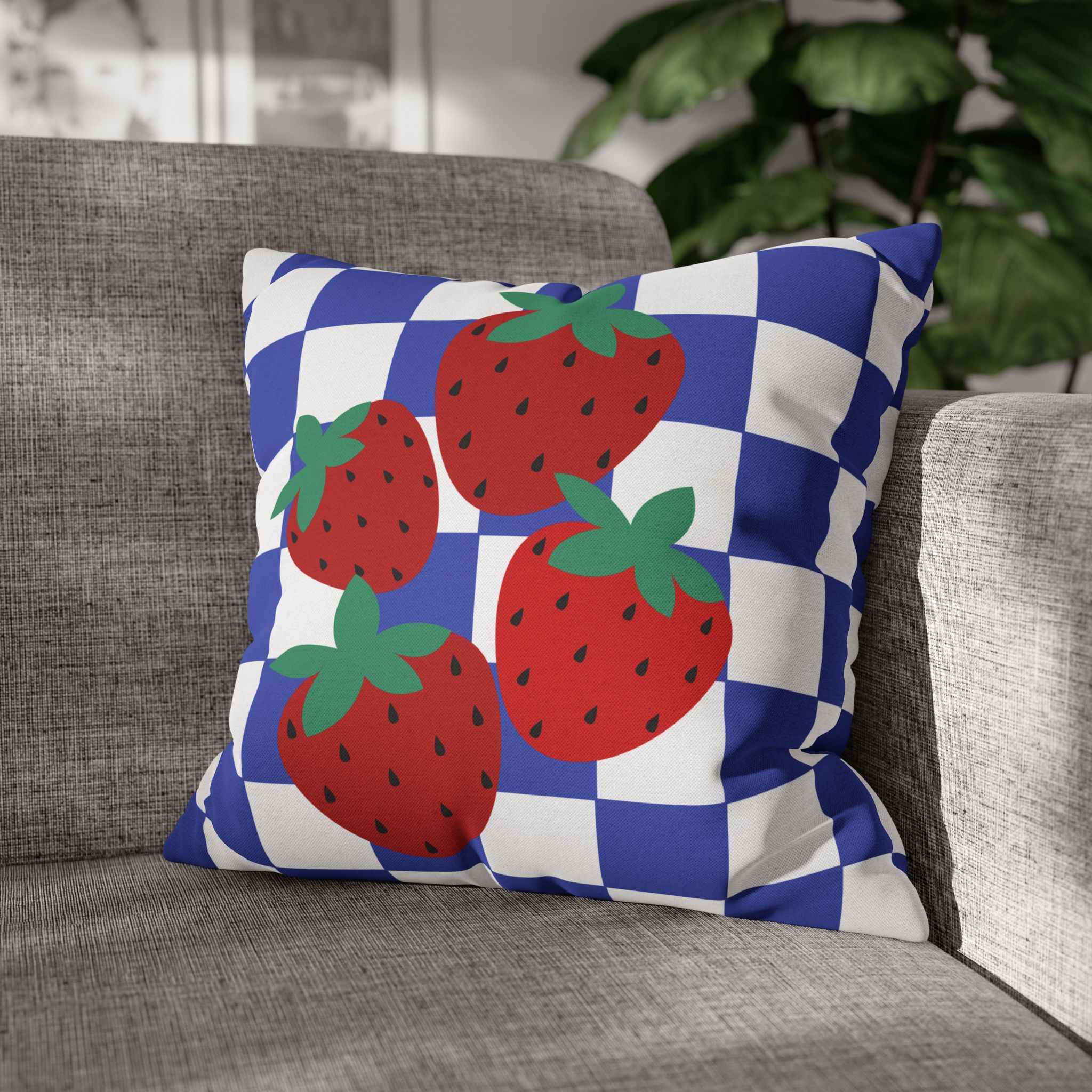
- Strawberry — Blue Check and Strawberry — Yellow Check put the motif and its support on a single cover, which is the least risky way to do this.
- Rectangle Check — Warm Yellow is the plain partner: pattern, but no subject competing with the fruit.
Route three — words and heat
If fruit feels too sweet, the kitchen still has two other registers available. Lettering is one, and it works because a kitchen is the one room where a phrase about eating is not a non-sequitur.
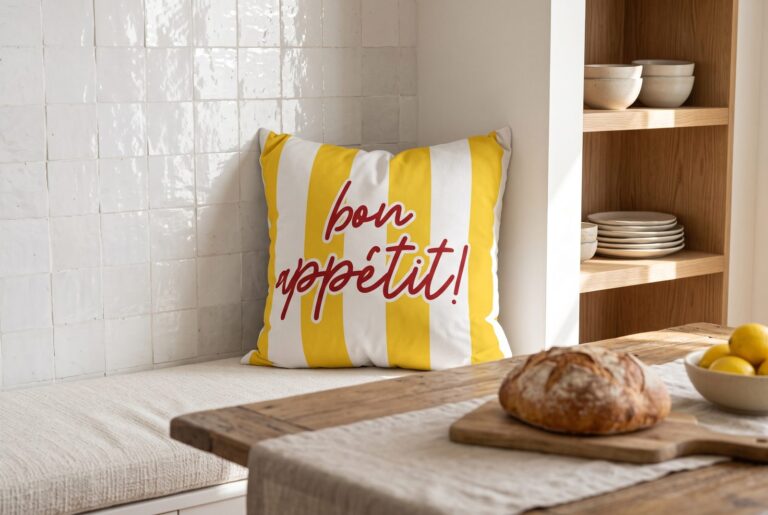
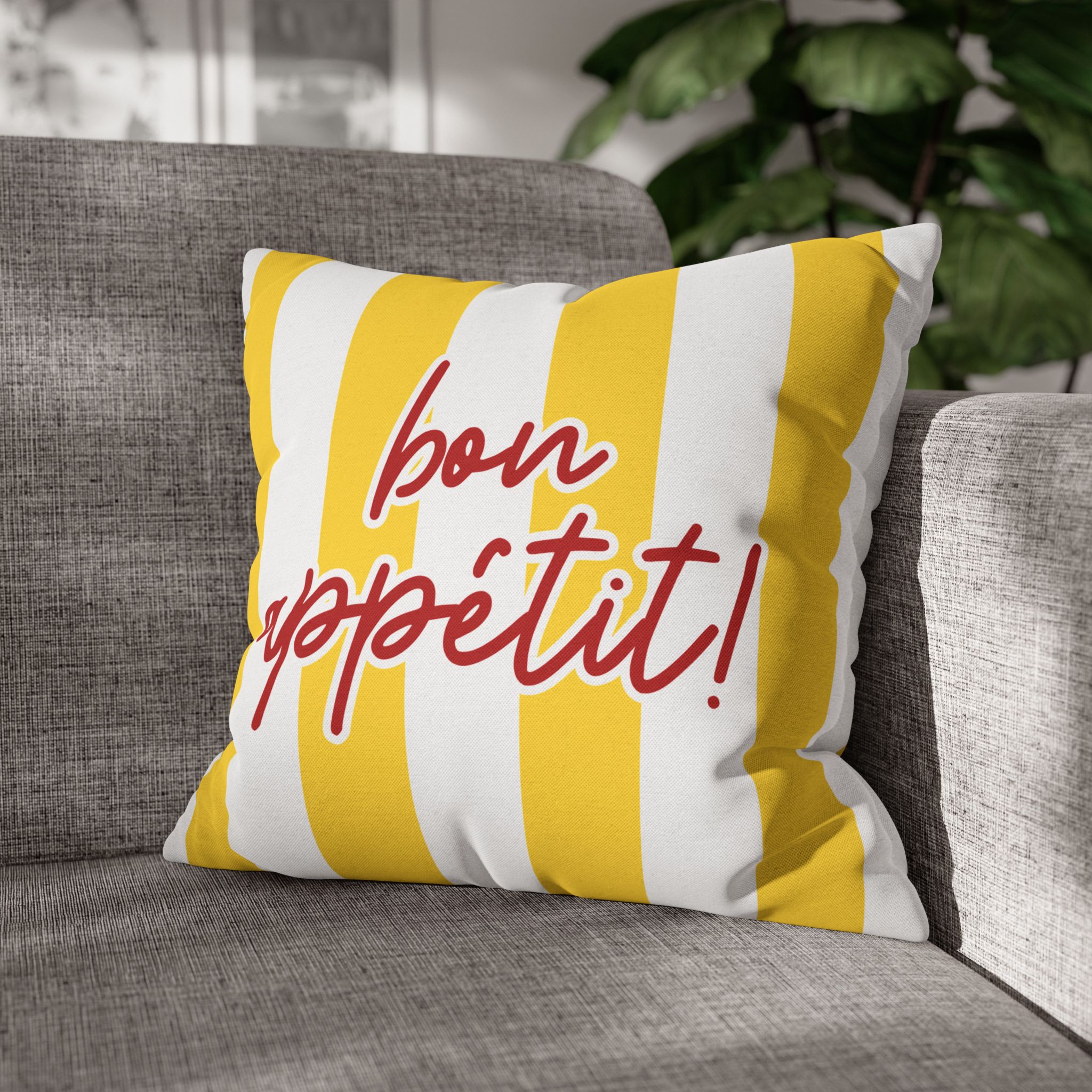
- Bon Appetit — Yellow Stripe, Blue Stripe and Pink Stripe put the lettering on a stripe, so the cover still works as pattern from across the room.
- Chilli Pepper — Blue Stripe and Chilli — Pink Stripe are the heat option: a food motif that reads as graphic rather than decorative.
- Vine Tomato — Red & Green is the most literal of the three and needs the quietest partners.
And if the nook is really a dining room
Where the seating is more formal, the Italian-holiday register does the same job with more restraint — Vita al Sole — Navy & Yellow and Green & Yellow carry the mood without putting produce on the furniture.
Sizing a bench, not a sofa
Most banquettes and window seats take 16″ or 18″ covers. Go to 20″ only if the bench back is genuinely sofa-height; anything larger tips the seat forward and makes it less comfortable to actually eat in. Our size guide has the full range and the insert rule.
Everything here is a cover only, no insert, printed both sides with a hidden zip and made to order from 14″ to 28″.
If your kitchen opens onto a living space and you want the two to agree, how to mix and match pillow covers covers the scale logic that lets one room borrow from the next. The full range is in our style collections.