Choose a pillow cover by checking the insert’s labeled size, measuring when needed, and deciding how full you want the finished pillow to feel. Equal labeled dimensions are a sensible starting point unless the cover or insert guidance recommends something different. Oh My PillowCase offers seven square cover sizes, and inserts are not included.
Start with the insert you already own
Find the insert label before measuring. It may tell you the intended dimensions more clearly than the shape of a soft, curved pillow does. A filled pillow can look smaller than its stated size because the fabric wraps around the filling.
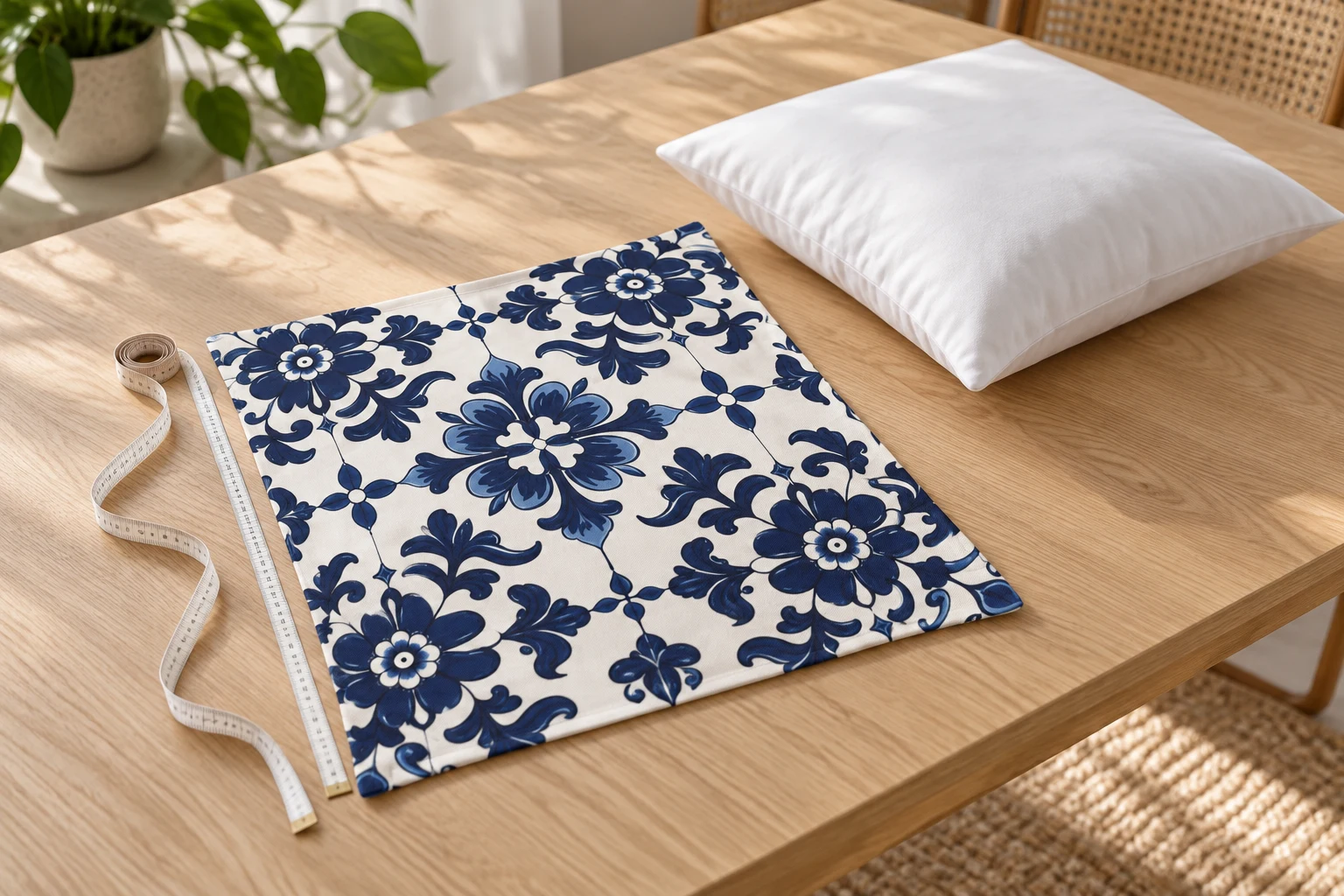
If the label is missing, place the insert on a flat surface and measure its outer casing from seam to seam across each direction as well as you can without stretching it. Avoid taking a measurement over the highest part of the bulge. Record both width and height rather than assuming the insert is square.
For an existing cover, remove the insert first, smooth the empty cover on a flat surface and measure the square body between its seams. Do not include a decorative edge in the body measurement if the old cover has one.
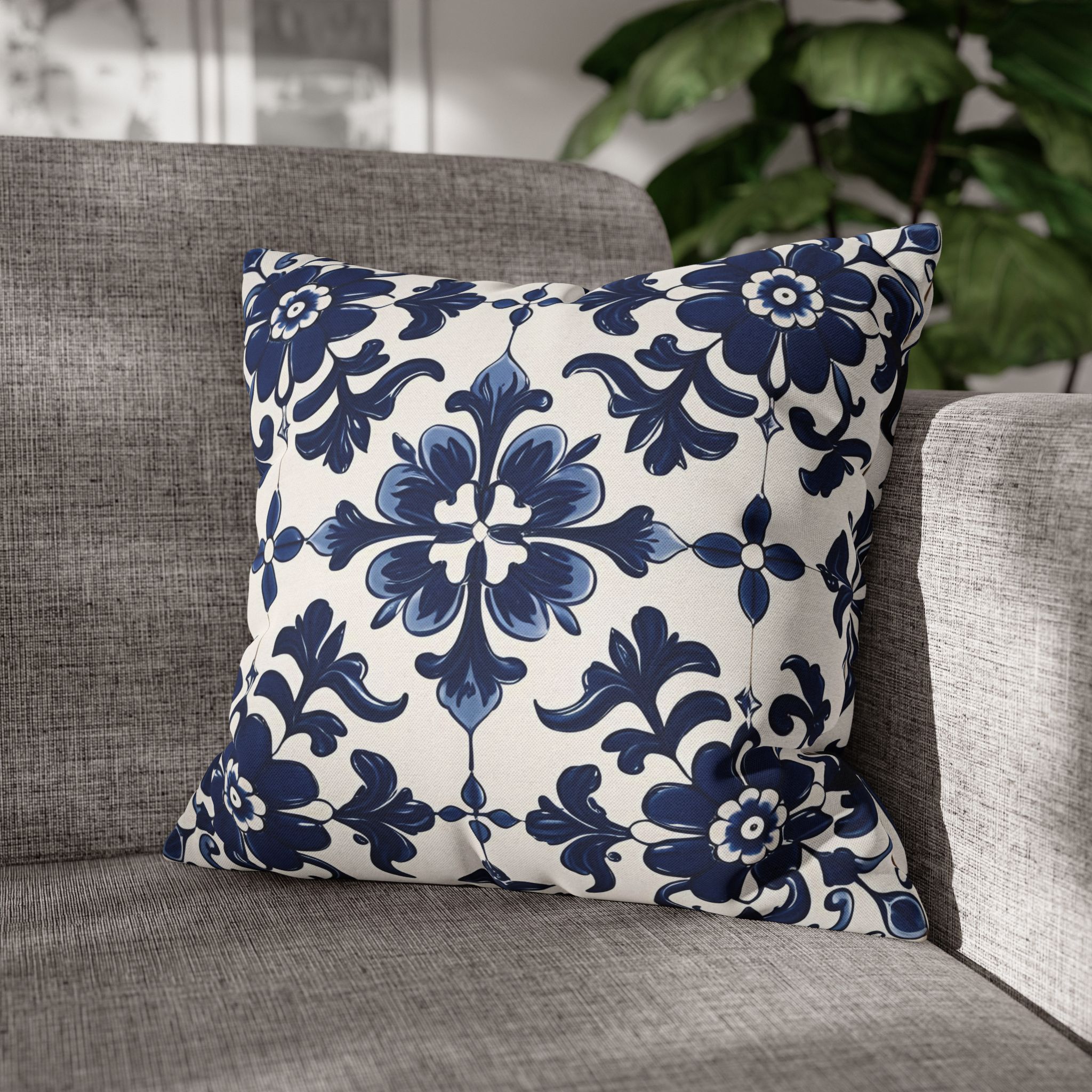
A cobalt tile design can replace a cover you already own once those dimensions are known. Choose the size from the measurement, not from how large the product appears beside a photographed sofa arm.
Understand the seven square cover sizes
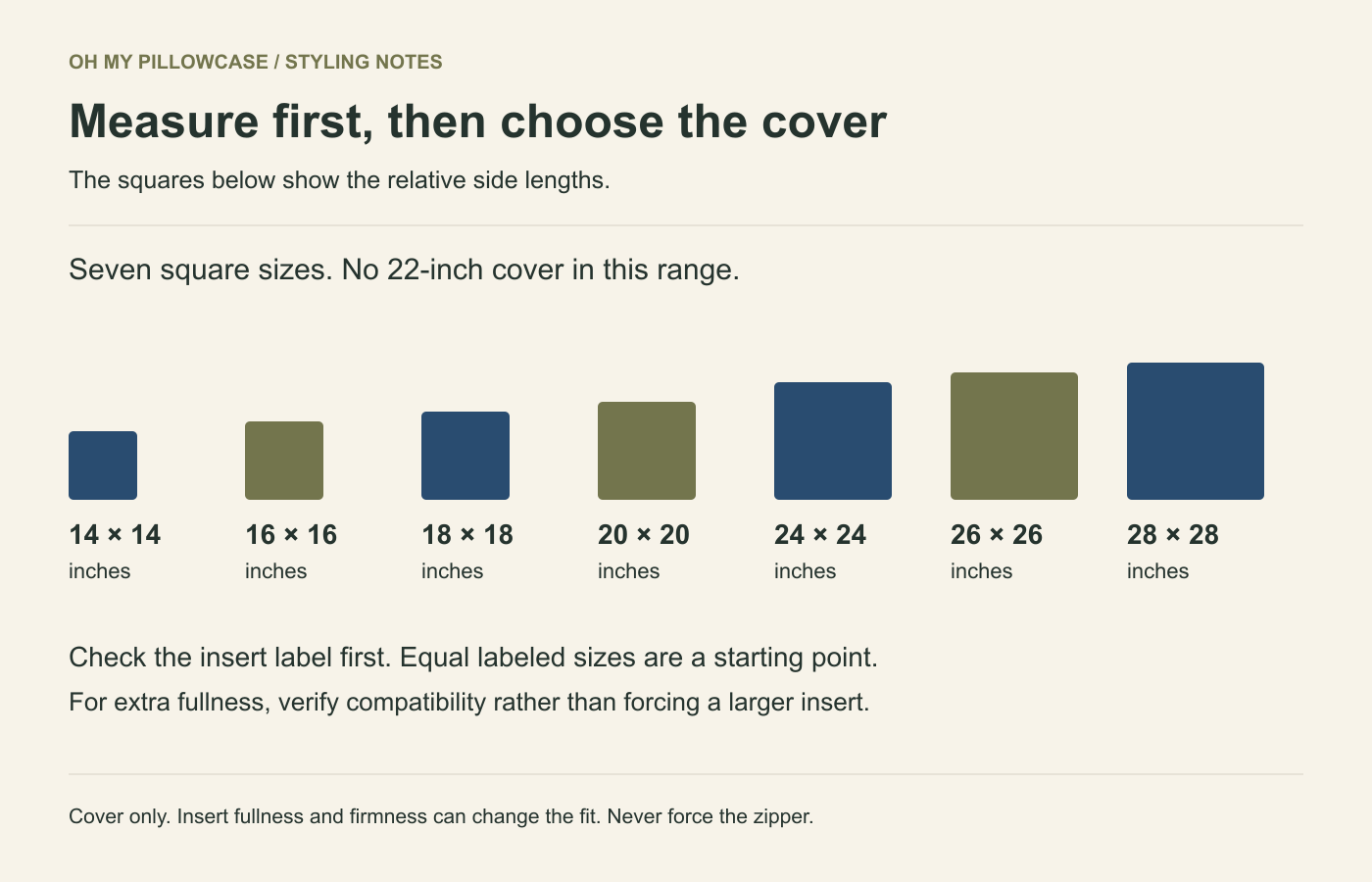
The available square sizes are 14, 16, 18, 20, 24, 26 and 28 inches. There is no 22-inch option in this range. If your existing insert falls between the listed sizes, check the fit guidance rather than rounding automatically.
| Cover size | Approximate size in centimeters | Possible role |
|---|---|---|
| 14 × 14 in | 35.6 × 35.6 cm | Small decorative accent |
| 16 × 16 in | 40.6 × 40.6 cm | Compact chair or front layer |
| 18 × 18 in | 45.7 × 45.7 cm | Sofa partner or larger chair accent |
| 20 × 20 in | 50.8 × 50.8 cm | Sofa anchor or bed layer |
| 24 × 24 in | 61.0 × 61.0 cm | Deep seating or substantial bed layer |
| 26 × 26 in | 66.0 × 66.0 cm | Large decorative square for a bed |
| 28 × 28 in | 71.1 × 71.1 cm | Oversized square where proportions allow |
The centimeter values are conversions for comparison. Use the listing’s inch size when selecting the variation, and check the product page before ordering.
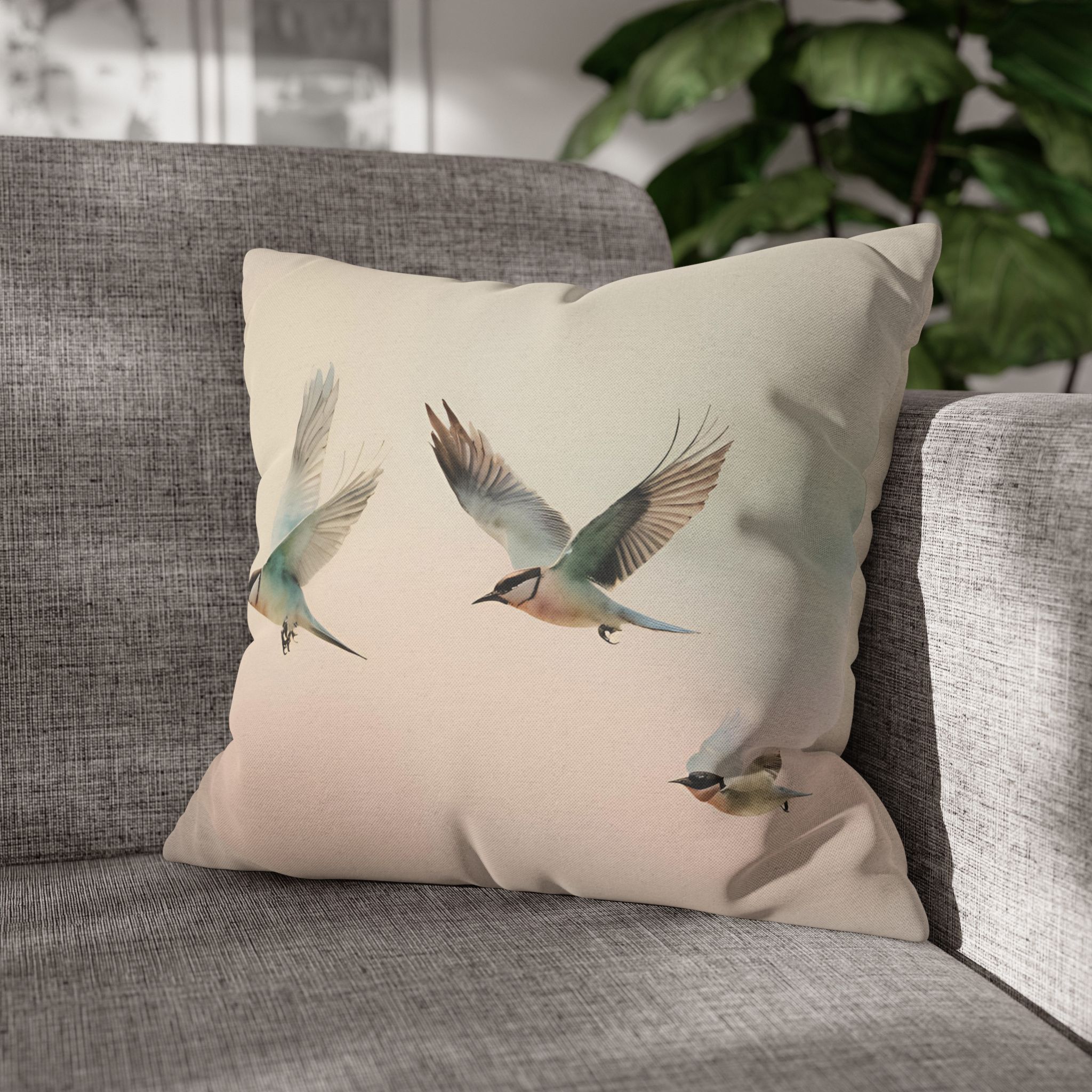
A pale bird illustration may work as a small accent or a larger focal pillow. Size changes its presence in the room, but it should still be chosen to fit the insert and intended placement.
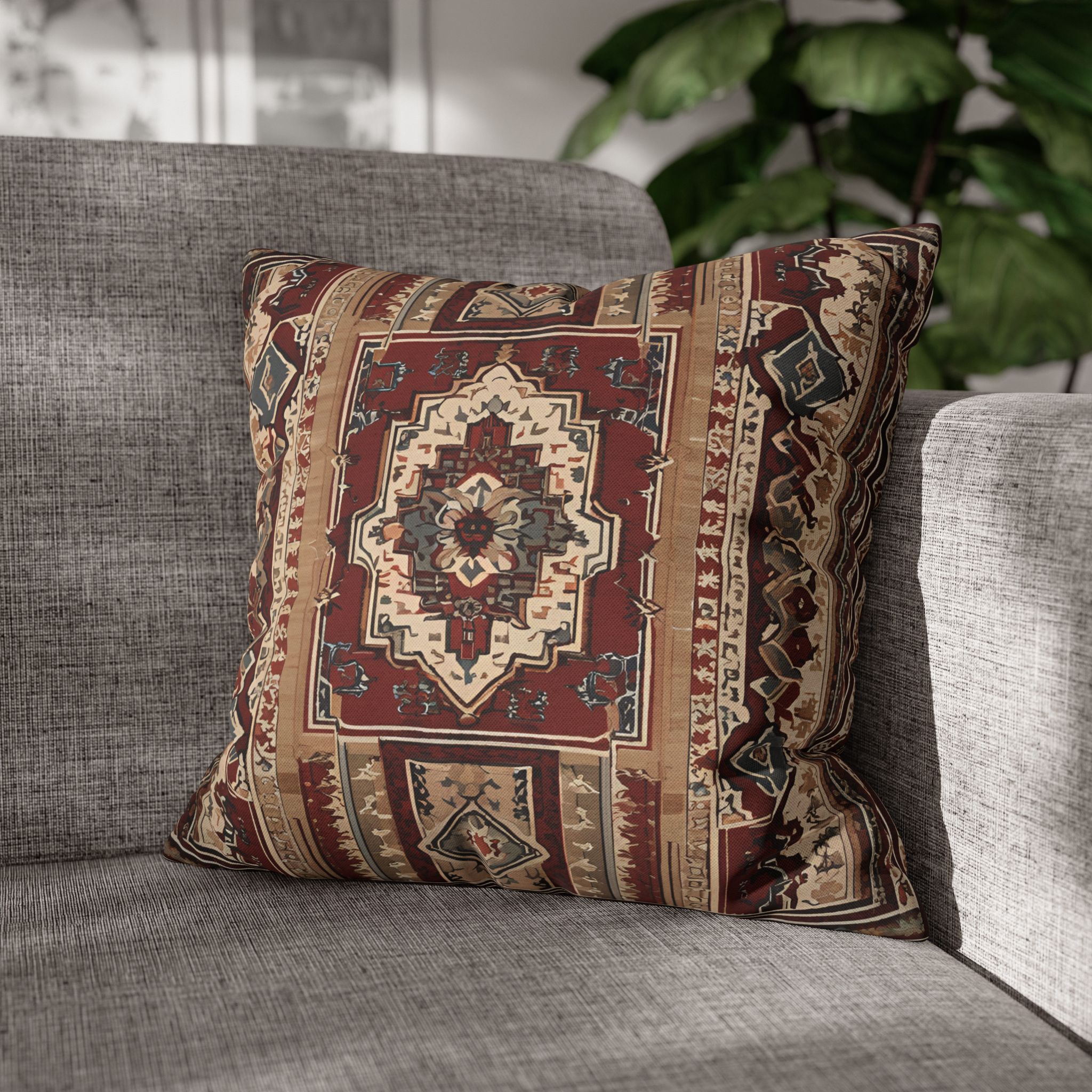
A rug-inspired medallion can take an anchor role on deeper seating. Test the size first so the printed focal point does not come at the expense of usable seat space.
Choose fullness without relying on one oversizing rule
A common styling preference is to use an insert slightly larger than the cover for a fuller appearance. That is not a universal instruction. Insert filling, firmness and construction affect how readily it compresses, while the cover and zipper still need to fit comfortably.
Start with equal labeled dimensions if no specific guidance says otherwise. If you prefer more fullness, check the insert maker’s recommendation and the cover guidance before changing size. Do not assume that every cover needs an insert two inches larger.
A firm oversized insert may strain the seams or make the zipper difficult to close. A soft insert of the same labeled size may give a different result. The look you want matters, but the zipper should never become the tool that forces the insert to fit.
A geometric design can make uneven filling easy to notice because its shapes provide a clear visual reference. After fitting, gently settle the insert into the corners and check whether the cover sits evenly.
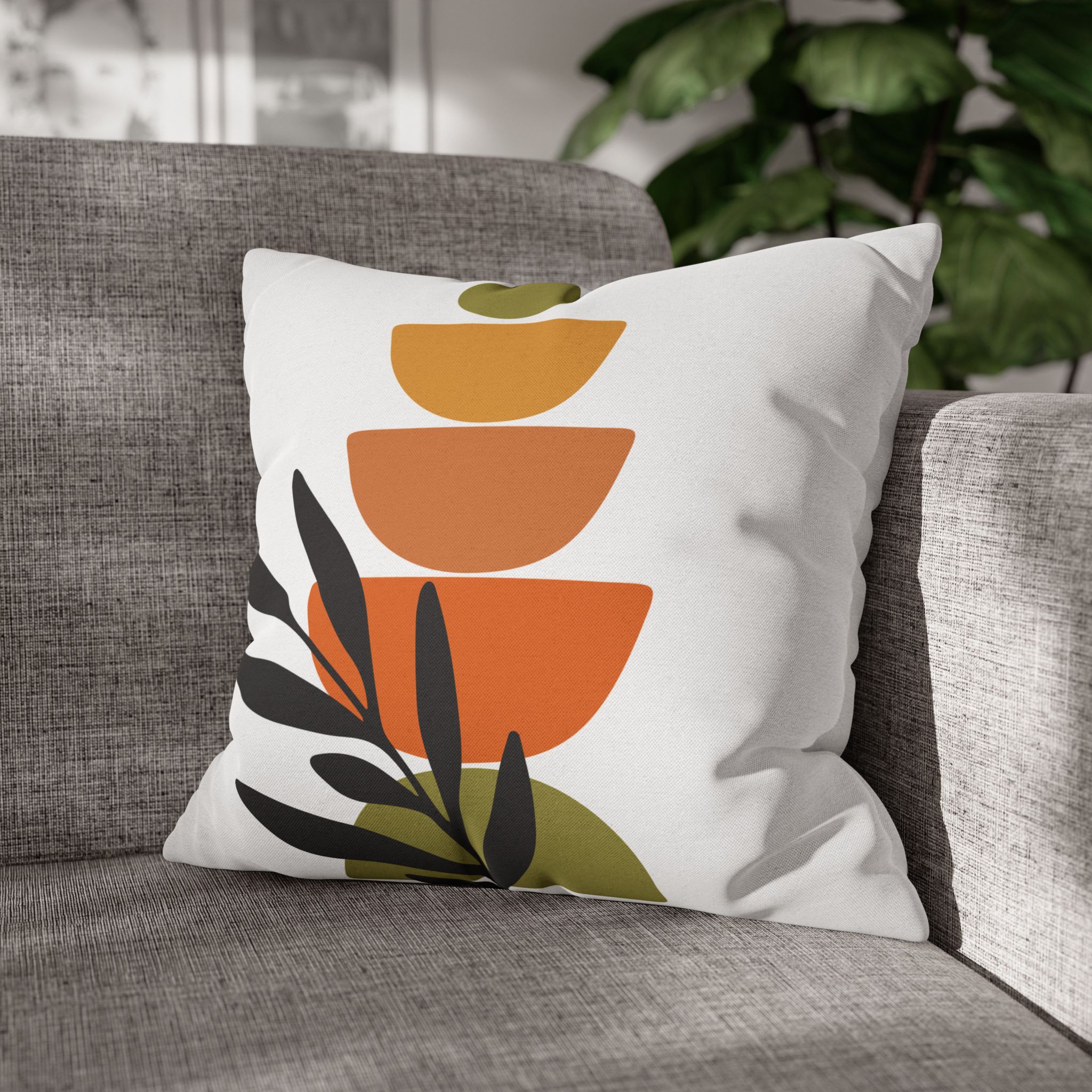
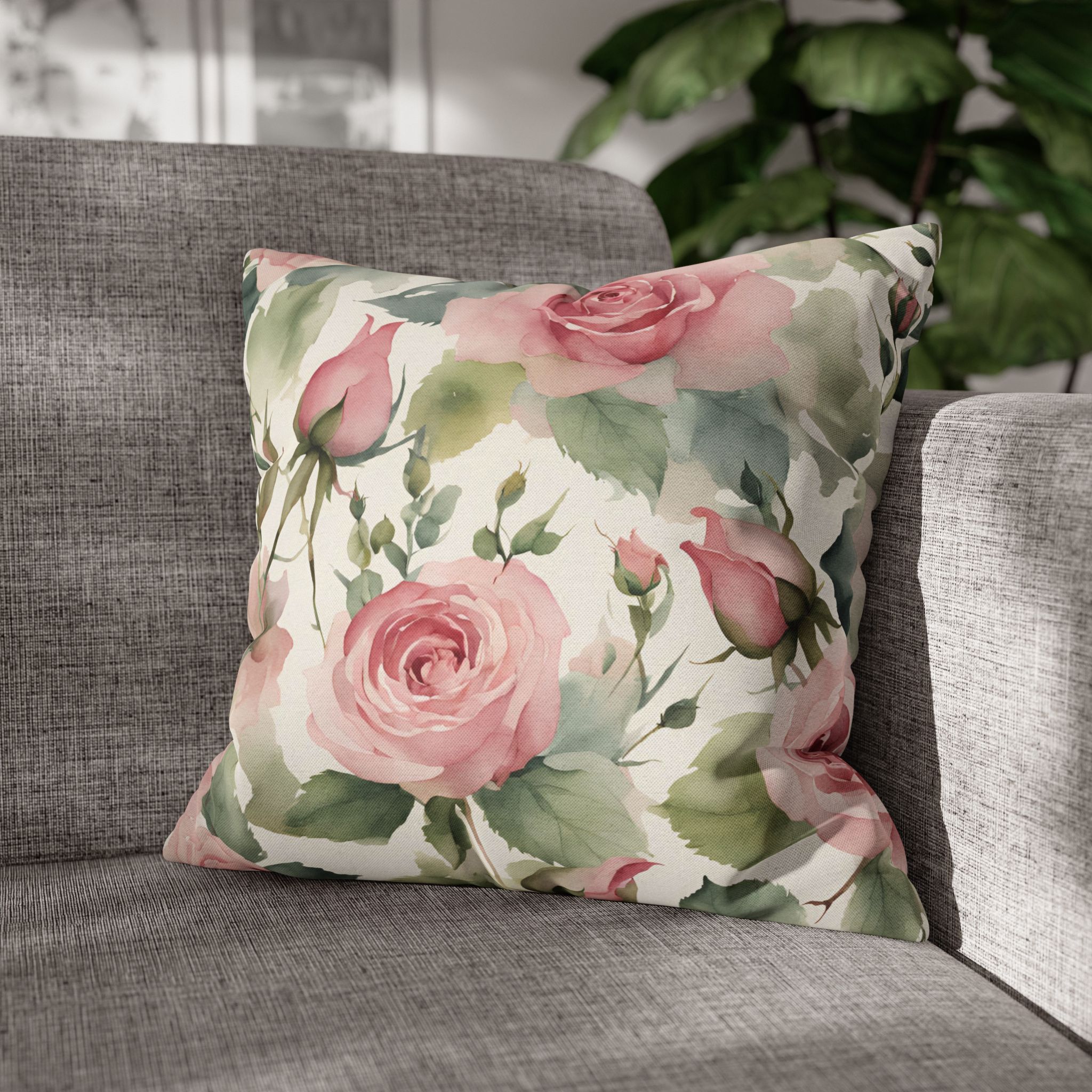
Use the same fitting care with a floral design, even if its softer shapes make small folds less obvious. Pattern does not change the need for a comfortable fit.
Check furniture proportions before buying new inserts
If you are choosing both cover and insert from scratch, start with the furniture. Measure the seat depth and the visible back height, then test a square in the proposed size. A paper template shows the footprint, while an existing pillow helps you judge the extra volume.
A 14-inch square is a small accent on a large sofa, but it may be enough for a compact chair. A 24-inch square may balance a deep sectional corner while feeling intrusive on a shallow seat. Neither size is inherently more correct.
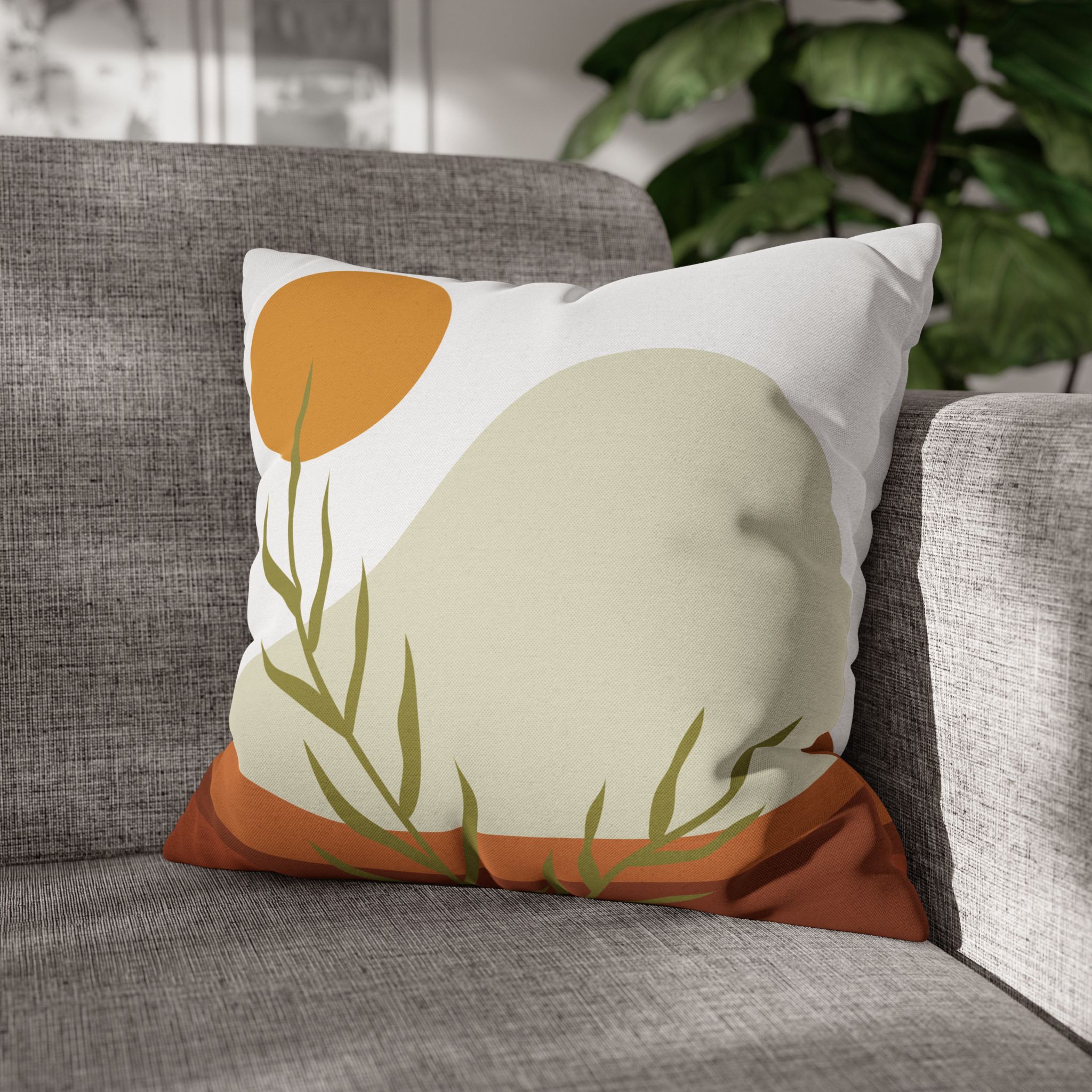
A landscape print can serve as a medium supporting pillow or a larger anchor. Decide the role before choosing its size so you do not end up with several large pillows competing for the same corner.
For detailed room arrangements, see the throw pillow size guide for sofas, sectionals and beds. This measurement guide is the place to resolve the individual cover and insert relationship first.
Fit the cover gently and check your order
Open the concealed zipper fully enough to insert the pillow without pulling against the opening. Support the insert, ease the corners into place and distribute the filling before closing. If you feel resistance, stop and reposition it rather than pulling harder.
Check that the design faces the intended direction and that the corners sit reasonably evenly. A slight adjustment inside the cover may be enough. If the entire pillow feels overfilled or the seams are under tension, reassess the insert instead of treating the problem as a styling technique.
Before ordering, confirm the design, the square size and the number of covers. Make a separate list of any inserts you still need. A product photograph showing a filled pillow does not mean the filling is part of the purchase.
Oh My PillowCase products are covers only, made from 100% polyester with double-sided prints and concealed zippers. They are made to order, designed in Istanbul and printed in the US. The size choice should follow those product details and the measurements you have recorded.
Keep a note of which insert belongs to which cover when rotating patterns. That saves you from testing a larger insert in a smaller cover next time and makes a seasonal change easier to manage.
Frequently asked questions
Should a pillow cover be smaller than the insert?
Not automatically; equal labeled dimensions are a sensible starting point when no other guidance is provided. A fuller look may call for a different insert, but check the recommendations and never force the fit.
What size cover should I get for an 18-inch insert?
Start by considering an 18 × 18-inch cover and checking the insert’s label and the cover guidance. Firmness and the preferred fullness can affect the final fit, so avoid choosing only from a general oversizing rule.
Are 22-inch pillow covers available in this range?
The listed square sizes are 14, 16, 18, 20, 24, 26 and 28 inches. If you own a 22-inch insert, check compatibility before choosing a different cover size.
See the available sizes within Portuguese tile pillow covers.