A useful throw pillow size guide starts with the furniture, not the largest cover available. Use larger squares as back layers where the seat has enough depth, then add smaller accents without blocking the places people sit. Measure existing inserts separately before ordering their covers.
Measure the space the pillows will occupy
Begin with the usable seat depth and the height of the sofa back above the seat. A deep sectional can accommodate a larger cushion than a shallow upright sofa, even when both pieces have similar overall widths. Low arms also change how much support a pillow has.
Test the sizes with pillows you already own or simple paper squares. The paper shows width and height, although a filled pillow will also take up depth. Put the trial shape in the intended position and look at it from the room entrance.
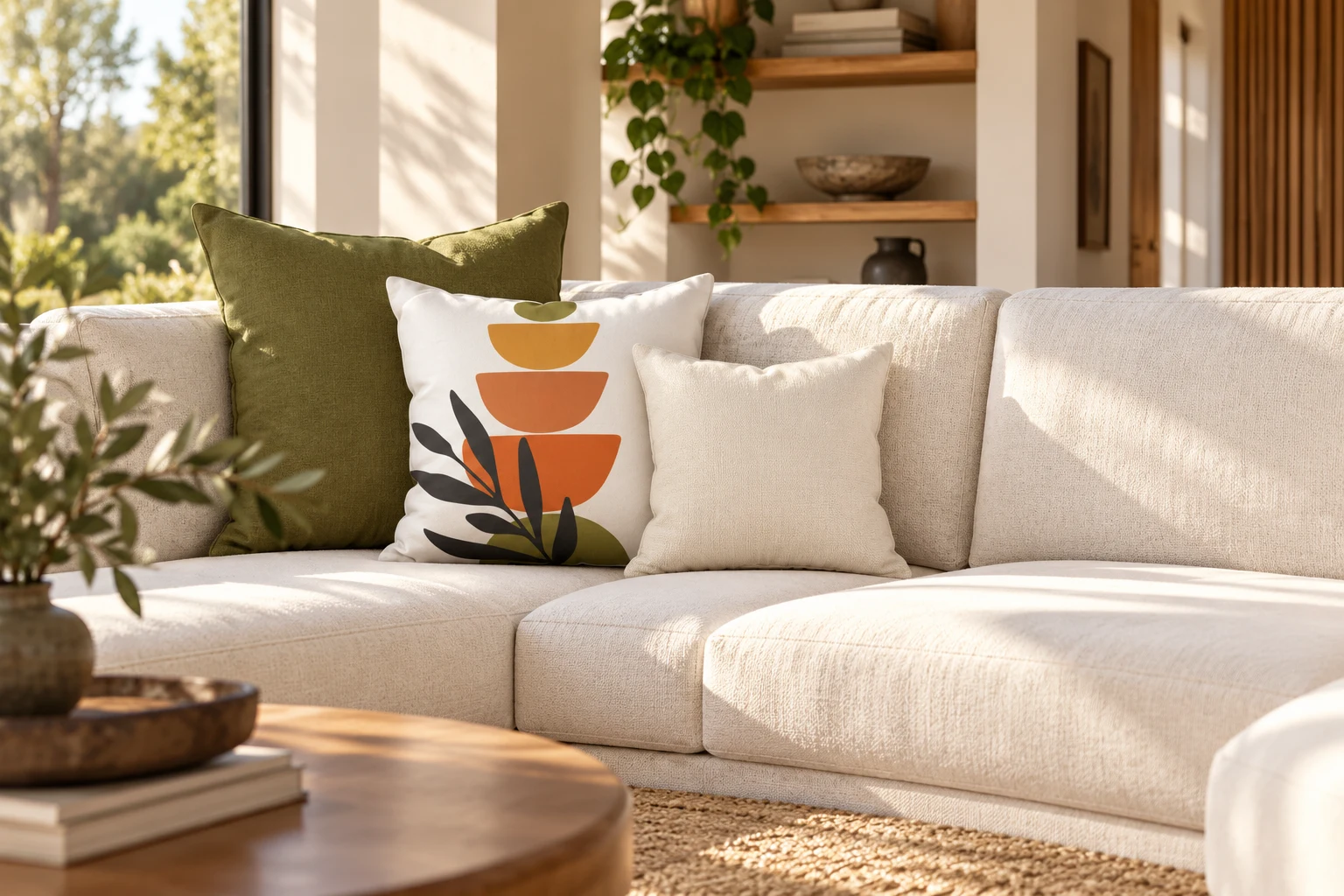
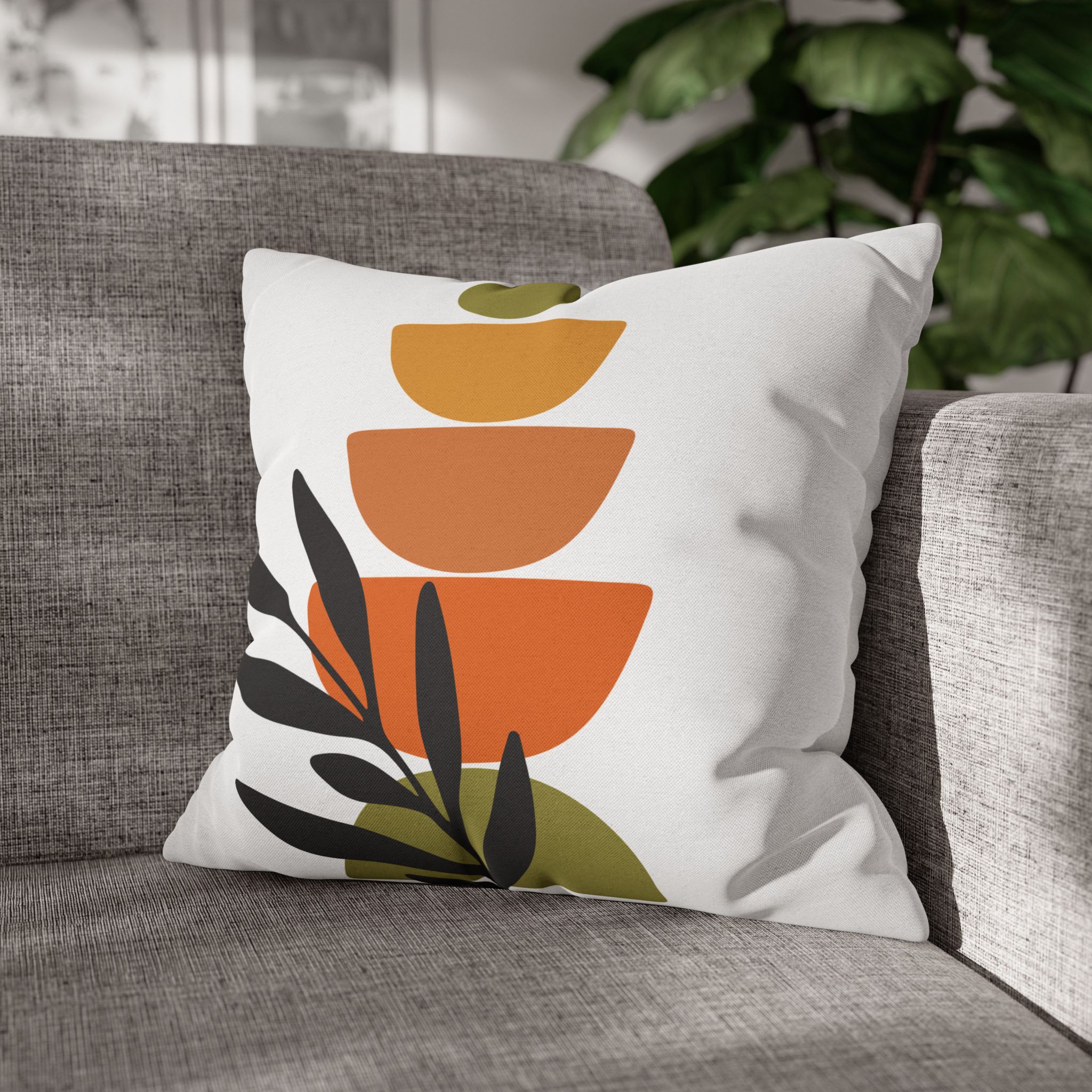
A geometric cover can serve as a visible anchor on a plain sofa. Its role comes from the size and placement you choose; the design name alone does not determine where it belongs.
If the main question is how to match a cover to an existing insert, use the cover measurement guide. This article focuses on arranging sizes across furniture, while that guide explains the individual cover choice.
Keep a standard sofa arrangement simple
For a three-seat sofa, try two 20-inch pillows at the ends and one 18-inch pillow brought slightly forward. This leaves a visible size difference without requiring a full line of cushions. On shallower seating, begin with 18-inch anchors and a 16-inch accent instead.
You can also use a pair of equal-sized pillows. Symmetry is useful when the sofa sits between matching lamps or faces a formal fireplace. Varying sizes is an option, not a requirement for a successful room.
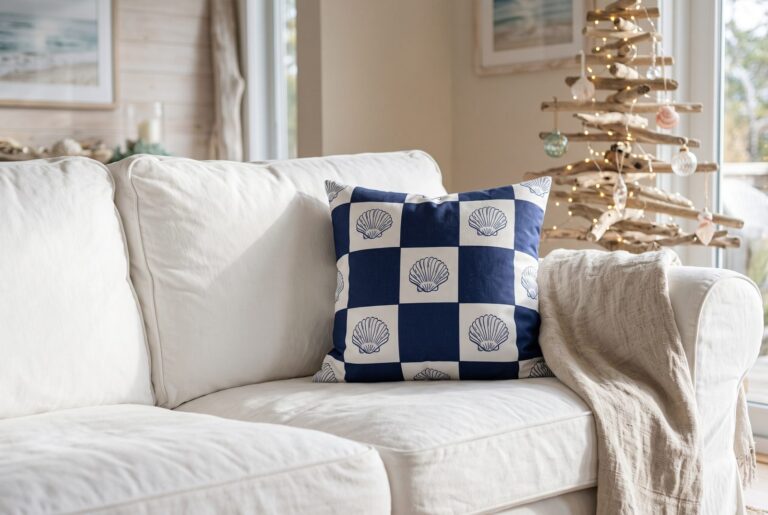
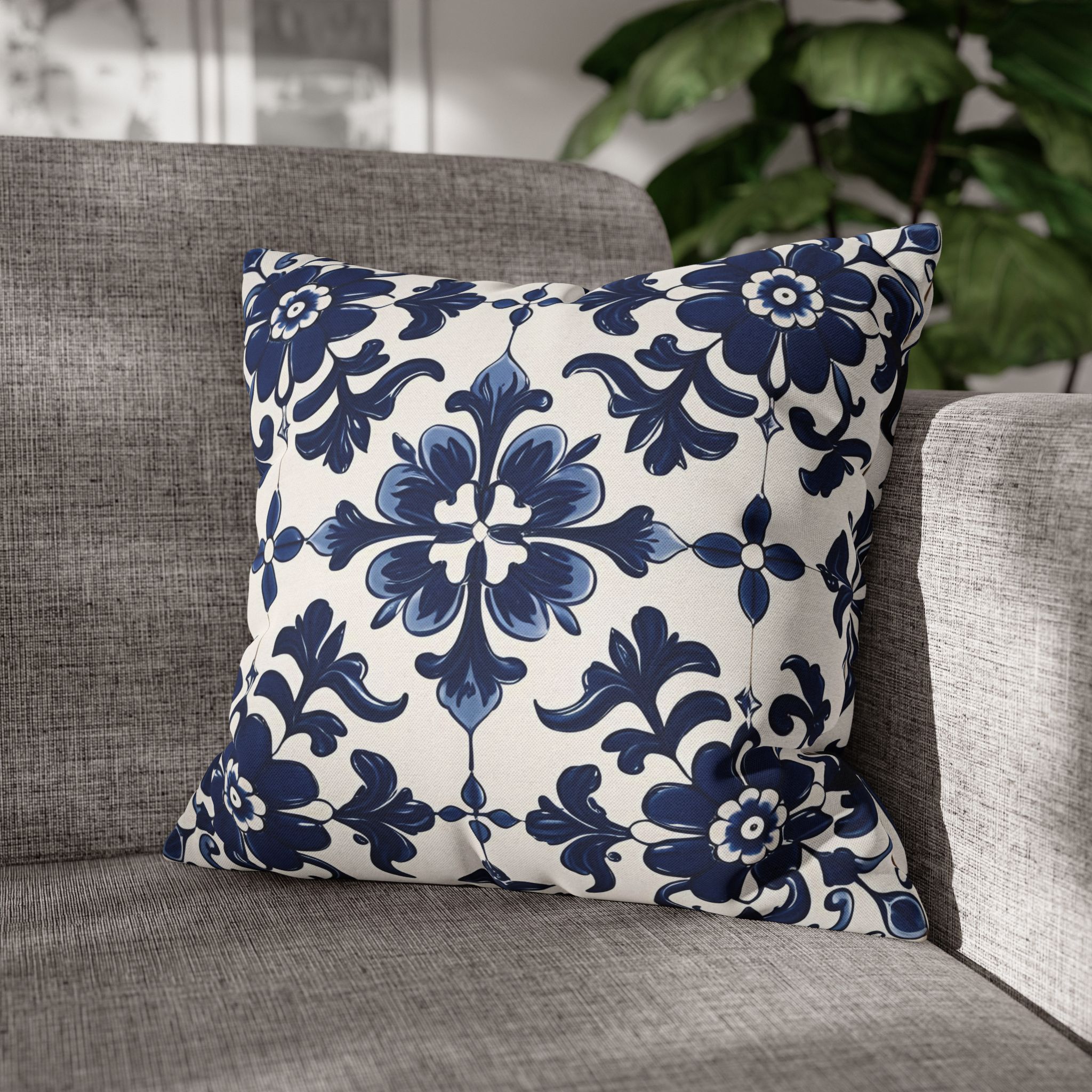
A cobalt tile print can work as a 20-inch anchor when you want a clear block of blue and cream. Pair it with a quieter existing cushion before adding a second detailed design.
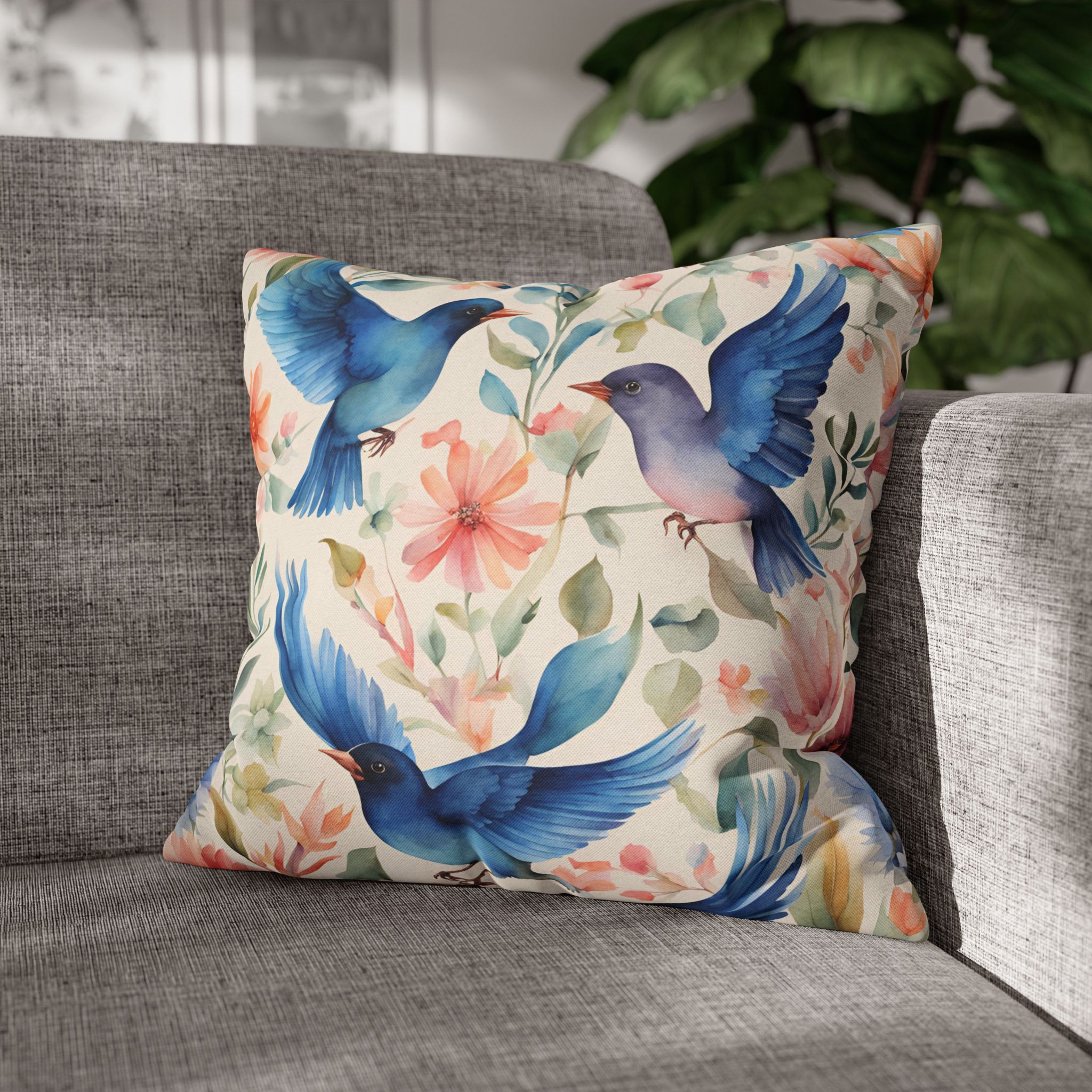
A bird illustration can take the accent position when its colors relate to the larger pillows. Keep enough of its surface visible for the artwork to read, rather than treating it as a small patch of color behind another cushion.
Sit in every usual seat after arranging the pillows. If a cushion blocks your preferred armrest or reduces the depth too much, move it to a chair or reduce the count. The arrangement should work in use as well as in a photograph.
Treat a sectional as several seating zones
A sectional is easier to arrange when you work with the outer arms and the corner separately. Start at one outer arm, add a corner grouping only if it stays comfortable, and leave some seats clear. You do not need a pillow on every cushion.
A 24-inch square can be worth testing in a deep corner. If it pushes the person sitting there forward, return to 20 inches. The largest sizes are useful only when the furniture can carry their volume.
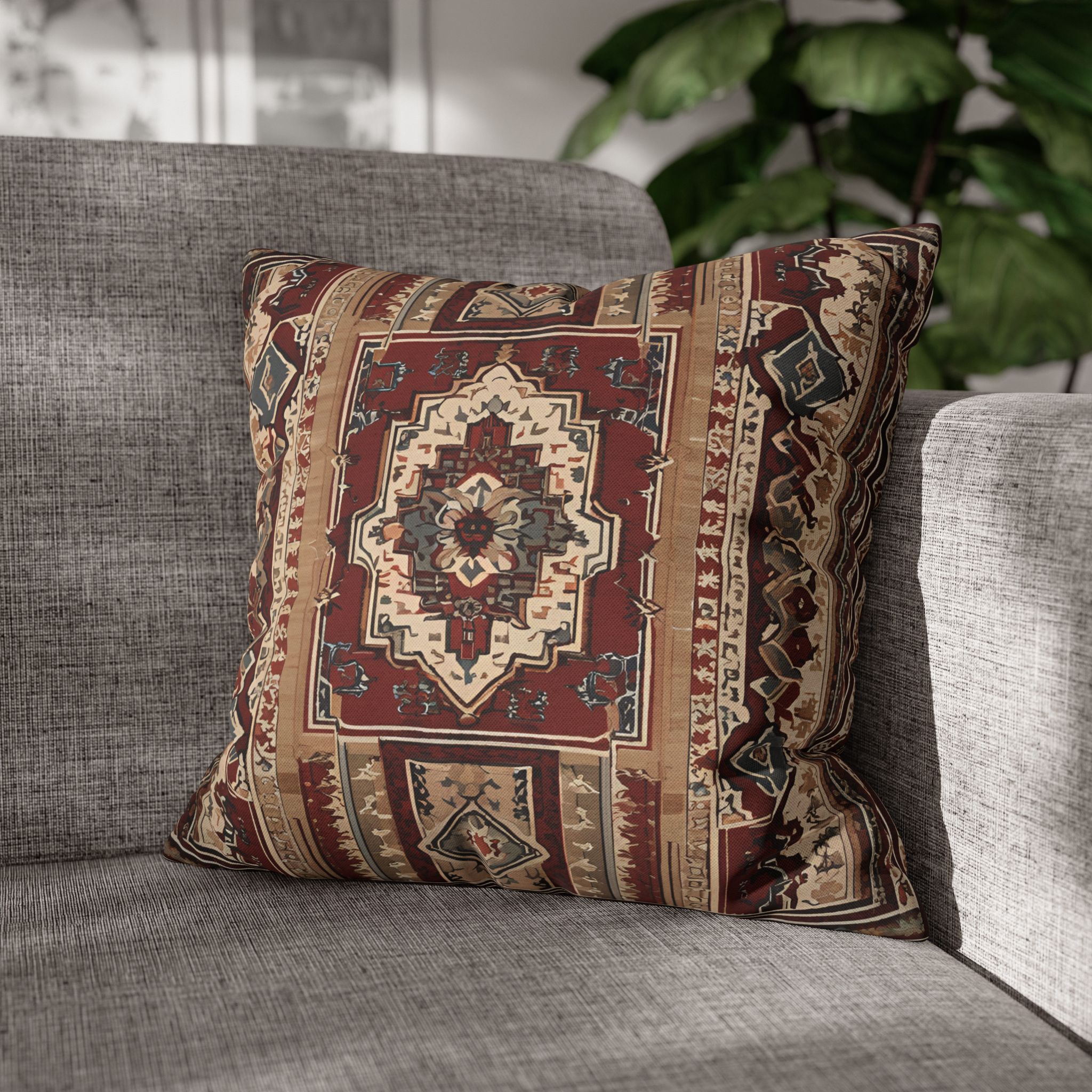
A red medallion cover can mark a corner without adding several smaller prints. Let its pattern be the focal point of that zone, then repeat one of its colors near the opposite arm.
A broad landscape design offers a less intricate alternative. It can connect separate groupings through a shared green or rust tone while allowing each end of the sectional to look slightly different.
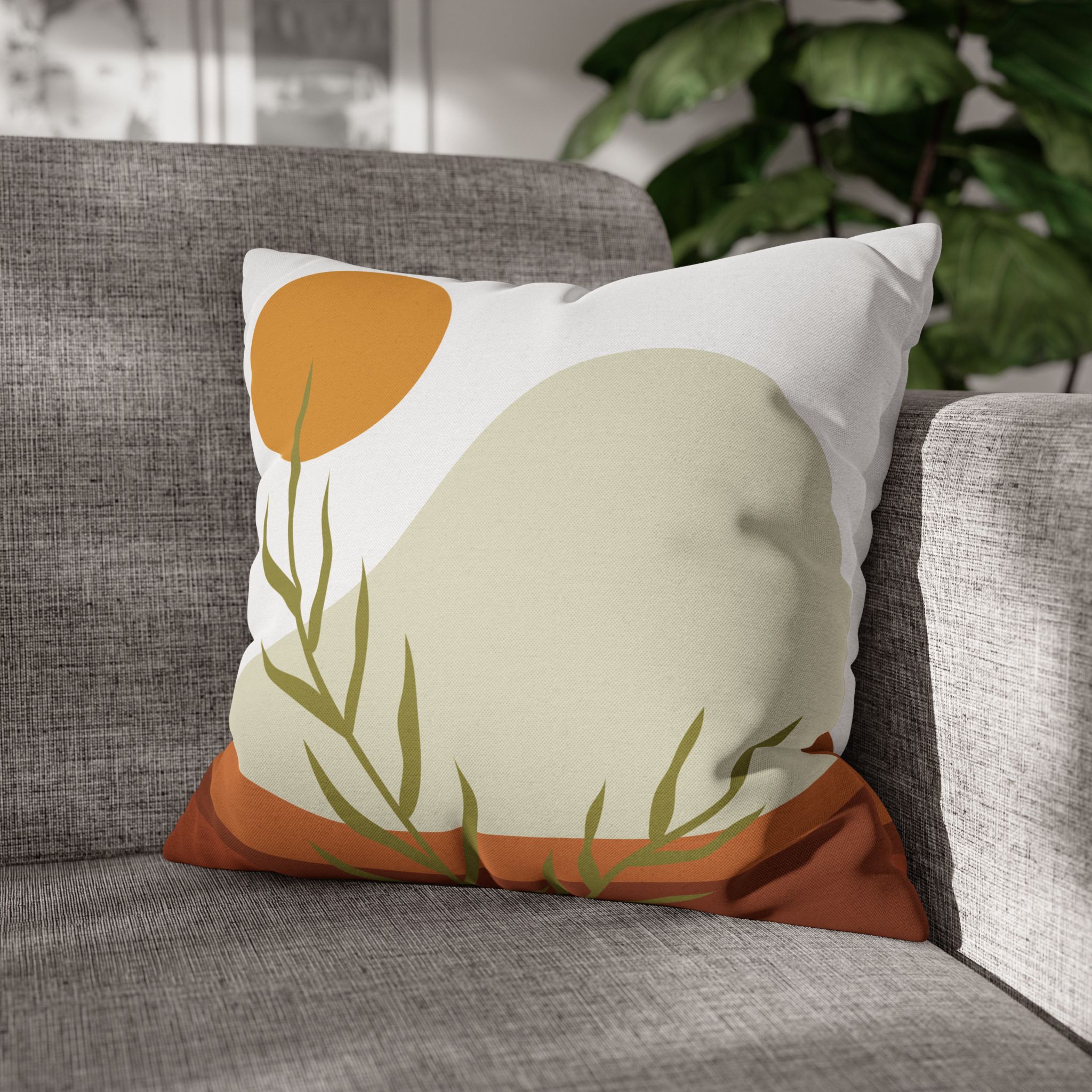
Avoid placing a large pillow at the end of a chaise merely to complete a pattern. That area may need to remain clear for someone’s legs. Place cushions where they support the way the sectional is used.
Build bed layers from back to front
For a bed, check the visible headboard height and the space in front of the sleeping pillows. Decorative squares should fit within that area without covering everything behind them. Begin with a pair, then decide whether a smaller accent is useful.
On a wider bed, 24 or 26-inch squares may create a substantial back layer. A 28-inch cover is another option to test where there is enough width and height. Do not assume the largest size is necessary because the bed itself is large.
A dark-ground floral can add depth against pale bedding. Keep the bloom visible near the front of the arrangement, or use a pair if the headboard is wide enough to support them.
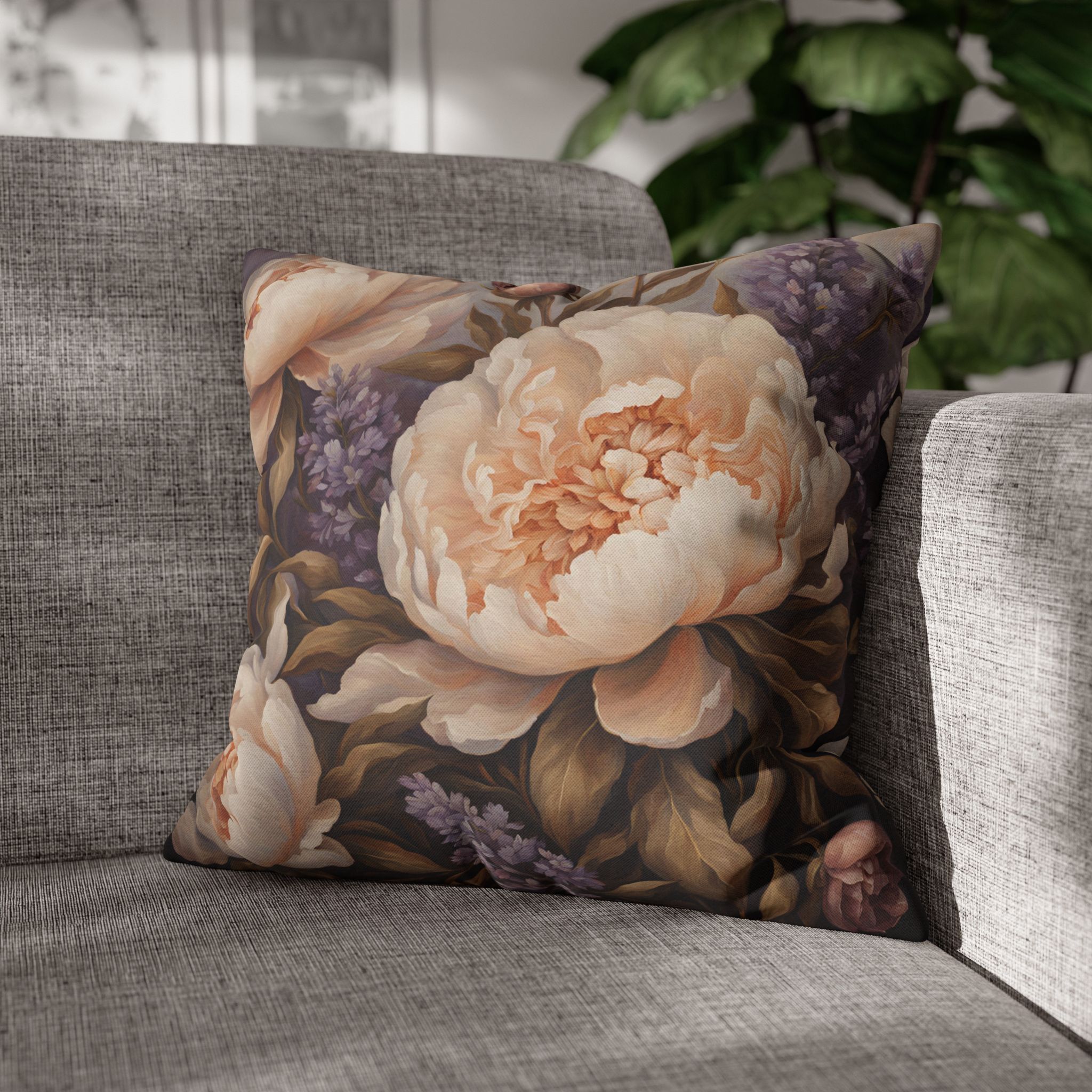
A softer floral can introduce color with a lighter effect. Compare it with the bedding rather than choosing by size alone; a high-contrast print attracts more attention than a quiet one of the same dimensions.
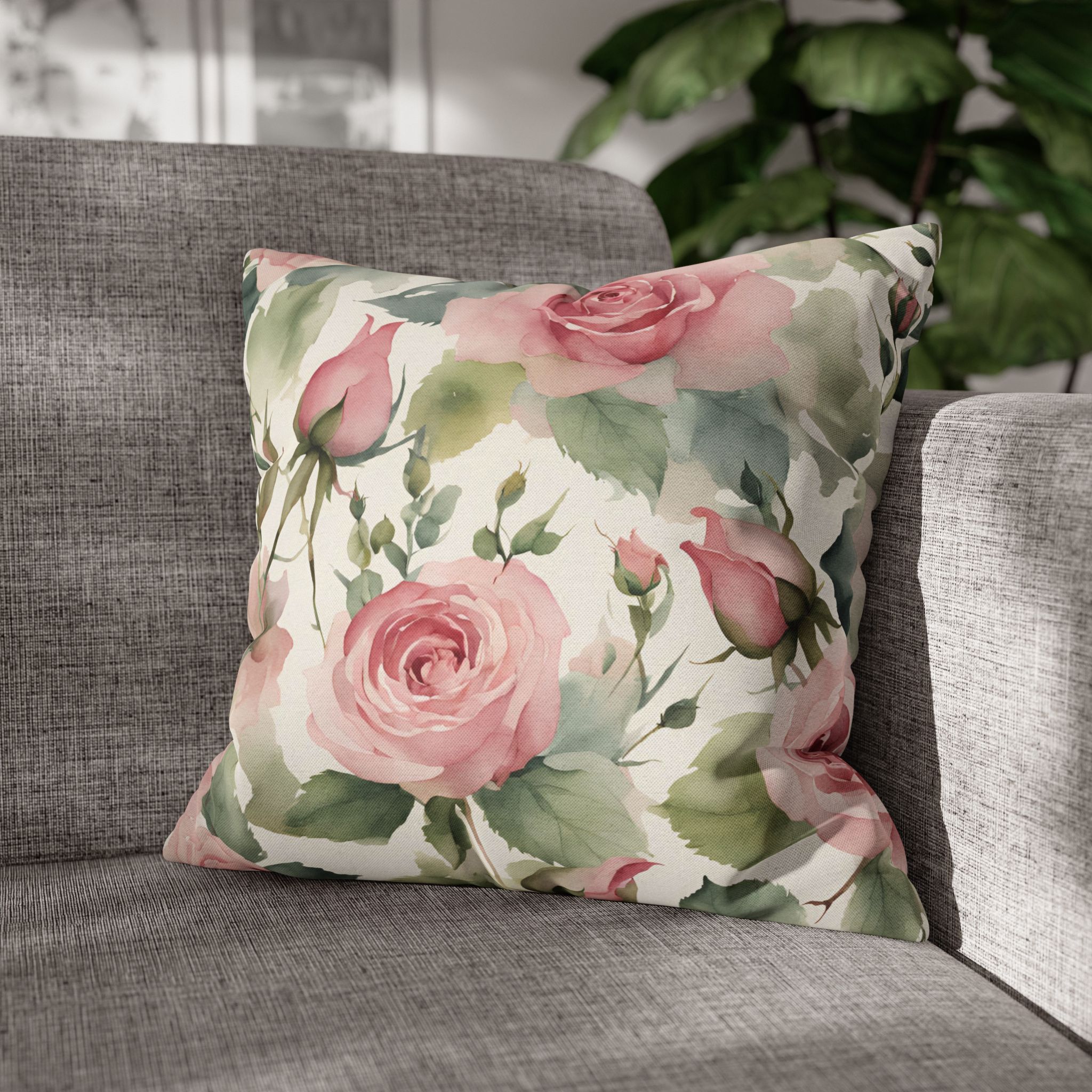
Leave a convenient place to put decorative pillows at night. If the room has no chair, bench or clear storage spot, a smaller number may make the bed easier to use every day.
Use the seven sizes as a planning range
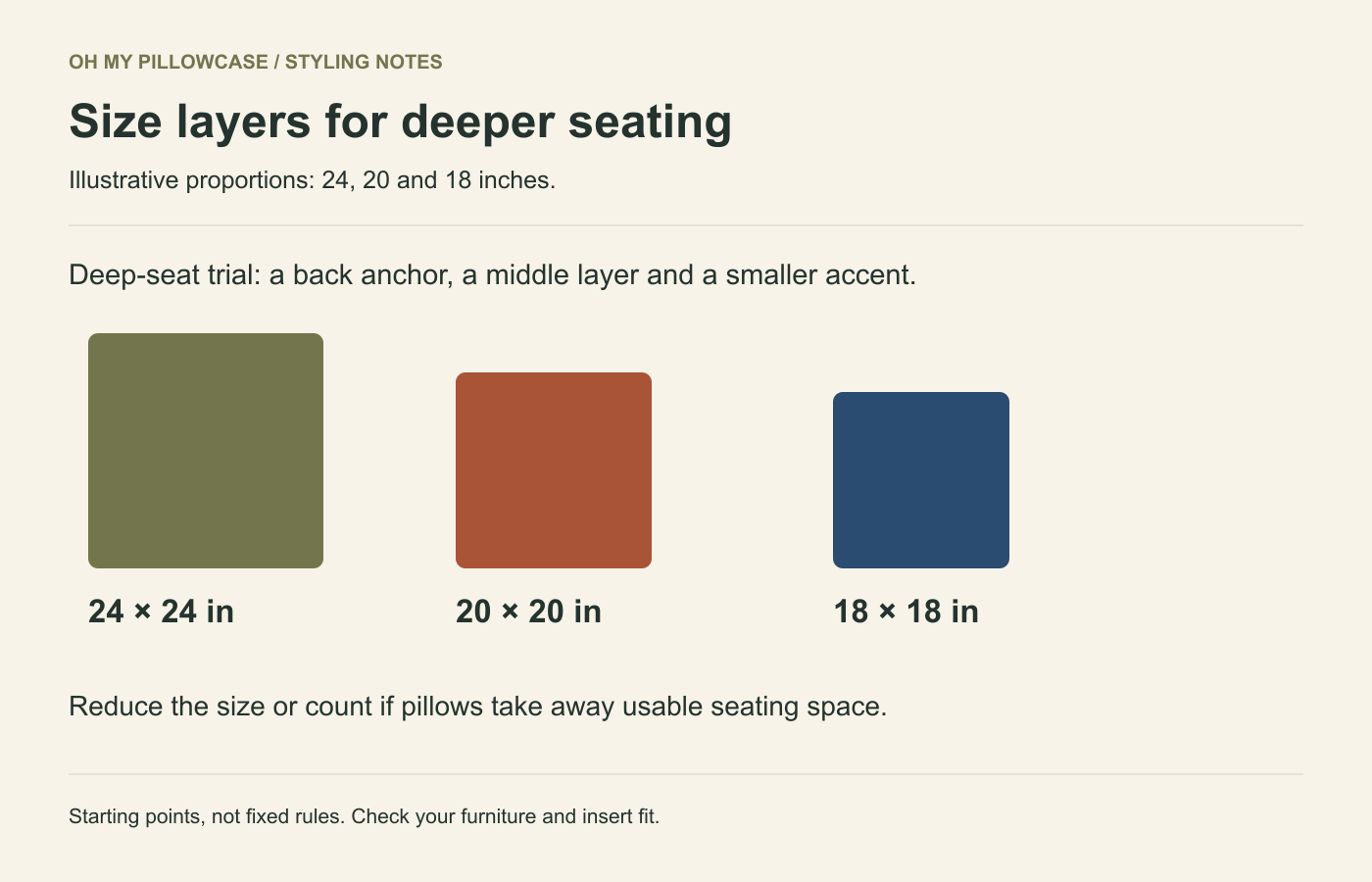
These starting points describe roles, not universal furniture measurements. Two sofas labeled as three-seaters can have very different proportions. Try the proposed size in your room before committing to several covers.
| Square cover size | A useful starting role | Check first |
|---|---|---|
| 14 × 14 in | Small front accent | Whether it looks isolated beside large anchors |
| 16 × 16 in | Compact seat or front layer | Remaining seat depth |
| 18 × 18 in | Sofa partner or chair accent | Back height and arm position |
| 20 × 20 in | Sofa anchor or medium bed layer | How far a filled pillow projects |
| 24 × 24 in | Deep sofa corner or bed back layer | Usable depth and headboard clearance |
| 26 × 26 in | Large decorative bed layer | Width available for a pair |
| 28 × 28 in | Oversized accent where space allows | Scale, storage and insert fit |
Once you choose the arrangement, check the insert separately. Equal labeled dimensions are a sensible starting point; a fuller look may require a different insert depending on its filling and the cover guidance. A larger insert is not automatically better, and you should never force the zipper closed.
Oh My PillowCase supplies covers only. Each is 100% polyester, printed on both sides and finished with a concealed zipper. The seven square sizes let you repeat a design in different roles, but artwork appearance and perceived size should always be checked against the listing.
Frequently asked questions
What size throw pillows should I use on a sofa?
Try 18 or 20-inch squares first, then adjust for the seat depth and back height. A compact sofa may need smaller accents, while a deep sofa may accommodate 24-inch anchors.
Should all the pillows on a sectional be the same size?
They can be, but a larger corner anchor with smaller supporting pillows may create useful variation. Leave some seating areas clear and judge the layout while sitting down.
What size decorative pillows work on a bed?
Consider 24 or 26-inch squares for a substantial back layer, with smaller accents in front. Check the headboard and available width before choosing 28-inch covers or multiple rows.
Browse size options within boho pillow covers.